Bookkeeper vs Accountant: What Is the Difference?
By TallyDesk Editorial TeamUpdated 3 min read
Quick answer
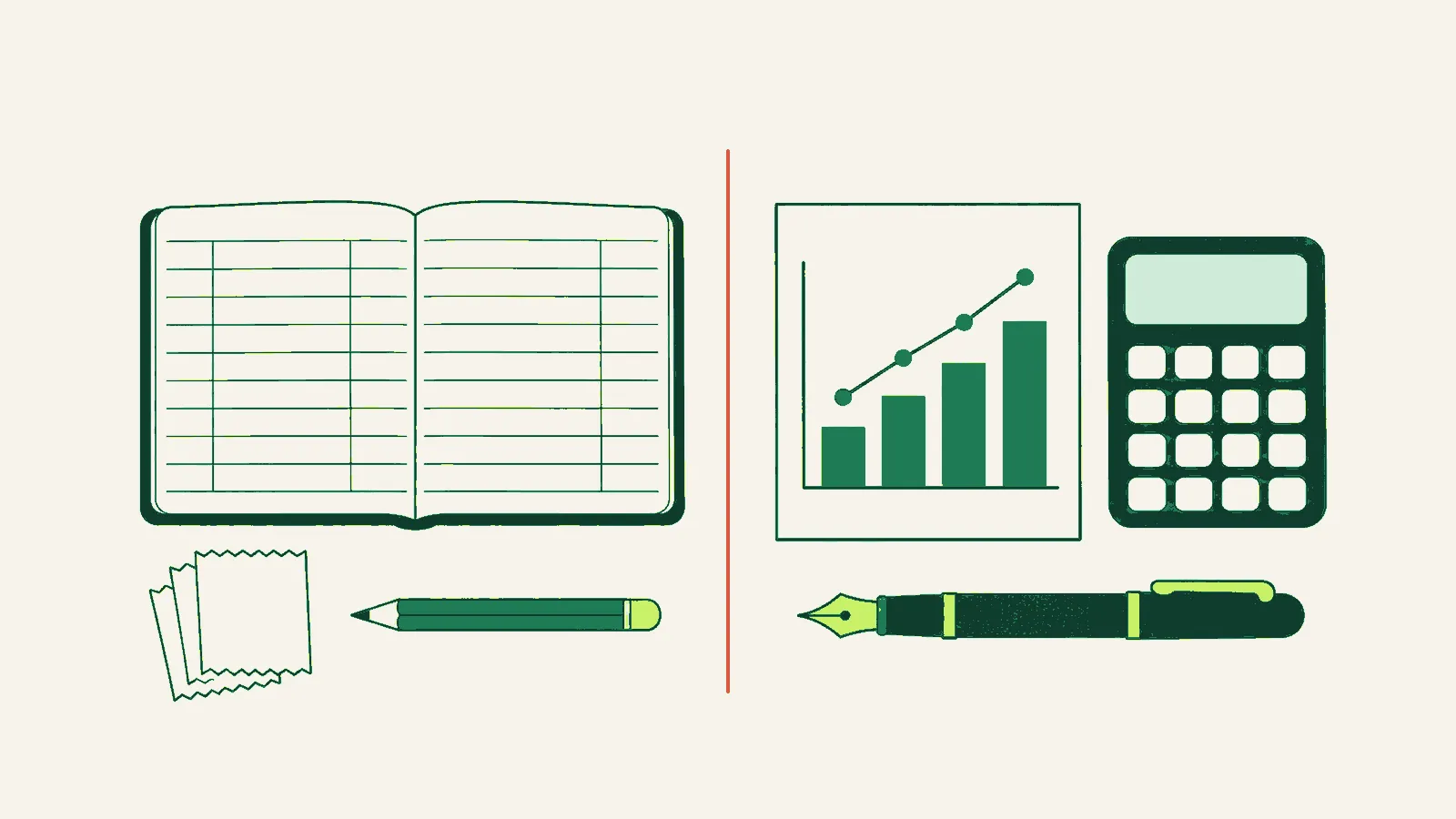
A bookkeeper records and reconciles your day-to-day transactions; an accountant uses those records to prepare year-end accounts, file tax returns and advise on tax. Bookkeepers typically charge £20 to £60 an hour and accountants £50 to £150 an hour, so many UK small businesses use both: a bookkeeper monthly and an accountant at year end.
Key takeaways
- Bookkeeping is recording: invoices, receipts, bank reconciliation, VAT returns and often payroll.
- Accounting is interpreting and reporting: annual accounts, tax returns, tax planning and advice.
- A bookkeeper is usually cheaper per hour, so letting one handle routine records reduces your accountant's bill.
- Neither title is legally protected in the UK. Check qualifications and anti-money laundering supervision.
The difference in one table
| Bookkeeper | Accountant | |
|---|---|---|
| Main job | Record and reconcile transactions | Report, file and advise |
| Typical tasks | Invoices, receipts, bank reconciliation, VAT returns, payroll | Year-end accounts, Corporation Tax, Self Assessment, tax planning |
| How often | Weekly or monthly | Quarterly or annually |
| Typical hourly rate | £20 to £60 | £50 to £150+ |
| Typical monthly fee | £40 to £300 | £30 to £300+ |
| Common qualifications | AAT, ICB | ACCA, ICAEW, CIMA, ICAS, AAT |
What a bookkeeper does
A bookkeeper keeps your financial records complete and accurate throughout the year. In practice that means:
- Entering sales invoices and supplier bills
- Matching bank and card transactions to those records
- Filing receipts and chasing missing paperwork
- Chasing late-paying customers, if you ask them to
- Preparing and submitting VAT returns
- Running payroll, in many cases
The result is a set of books that shows where the business stands at any point, and that an accountant can use without rework. Costs are covered in how much does a bookkeeper cost?
What an accountant does
An accountant takes the finished records and produces what the law and HMRC require, then advises on what the numbers mean:
- Annual accounts for Companies House
- Company Tax Returns and Corporation Tax calculations
- Self Assessment tax returns
- Tax planning, such as salary and dividend mix for directors
- Advice on business structure, funding and growth
Costs are covered in how much does an accountant cost?
Where the two overlap
The line between the roles is not fixed. Many bookkeepers file VAT returns and Self Assessment returns. Most accountancy firms offer bookkeeping. Cloud software has blurred things further by automating much of the data entry.
A useful rule: bookkeeping looks at what has happened, accounting decides what to do about it.
Which one do you need?
You probably need only an accountant if:
- You are a sole trader with under about 50 transactions a month
- You are happy to keep your own records in software
- You mainly want your tax return done correctly
You probably need a bookkeeper as well if:
- You are VAT registered
- You have staff on a payroll
- You handle more than about 100 transactions a month
- Your records are regularly behind
You probably need an accountant for certain if:
- You run a limited company
- You have rental income, capital gains or income from abroad
- You are planning to raise finance, restructure or sell
Why using both often costs less
Accountants bill at a higher rate. If your accountant spends six hours at year end sorting a bag of receipts at £90 an hour, you have paid £540 for work a bookkeeper would have done for about £180 across the year. Clean monthly bookkeeping lets your accountant spend their time on accounts and tax, which is what you are paying the higher rate for.
Qualifications and regulation in the UK
Neither "bookkeeper" nor "accountant" is a protected title in the UK. Anyone can use them. What you can check:
- Professional body membership. AAT and ICB for bookkeepers; ICAEW, ACCA, CIMA and ICAS for accountants. "Chartered accountant" is a protected description.
- Anti-money laundering supervision. Any business offering bookkeeping or accountancy services must be supervised by HMRC or a professional body.
- Professional indemnity insurance. This covers you if their mistake costs you money.
Getting quotes
Decide which tasks you want handled, then ask for quotes against that list. You can compare bookkeeper quotes or compare accountant quotes for free.
Frequently asked questions
Is a bookkeeper cheaper than an accountant?
Yes. UK bookkeepers typically charge £20 to £60 an hour, compared with about £50 to £150 an hour for accountants. The work is different, though: a bookkeeper keeps records accurate, while an accountant prepares statutory accounts and tax returns.
What is the difference between bookkeeping and accounting?
Bookkeeping is the routine recording of financial transactions. Accounting takes those records and turns them into financial statements, tax returns and advice. Bookkeeping happens weekly or monthly; most accounting work happens quarterly or annually.
What is a bookkeeper not allowed to do?
A bookkeeper cannot perform a statutory audit, which is restricted to registered auditors. There is no law stopping a bookkeeper from preparing accounts or tax returns, but they should only take on work they are trained and insured to do.
Do I need both a bookkeeper and an accountant?
Not always. A sole trader with few transactions may need only an accountant once a year, or neither. Businesses with VAT, staff or more than about 100 transactions a month usually save money by using a bookkeeper for records and an accountant for year-end work.
Can a bookkeeper do my tax return?
Some can. Many qualified bookkeepers prepare Self Assessment tax returns and VAT returns for clients. Limited company accounts and Corporation Tax returns are more often handled by an accountant.
Can an accountant do my bookkeeping?
Yes, most accountancy firms offer bookkeeping. It often costs more per hour than an independent bookkeeper, but having one firm do everything can be simpler.
Sources
Figures in this guide were checked against the following on 26 November 2026. How we research prices.